

TV, or Not TV?
Is that the question?

If you enjoy this post, I’d LOVE it if you’d click the ❤️ at the top or bottom. Thank you!!
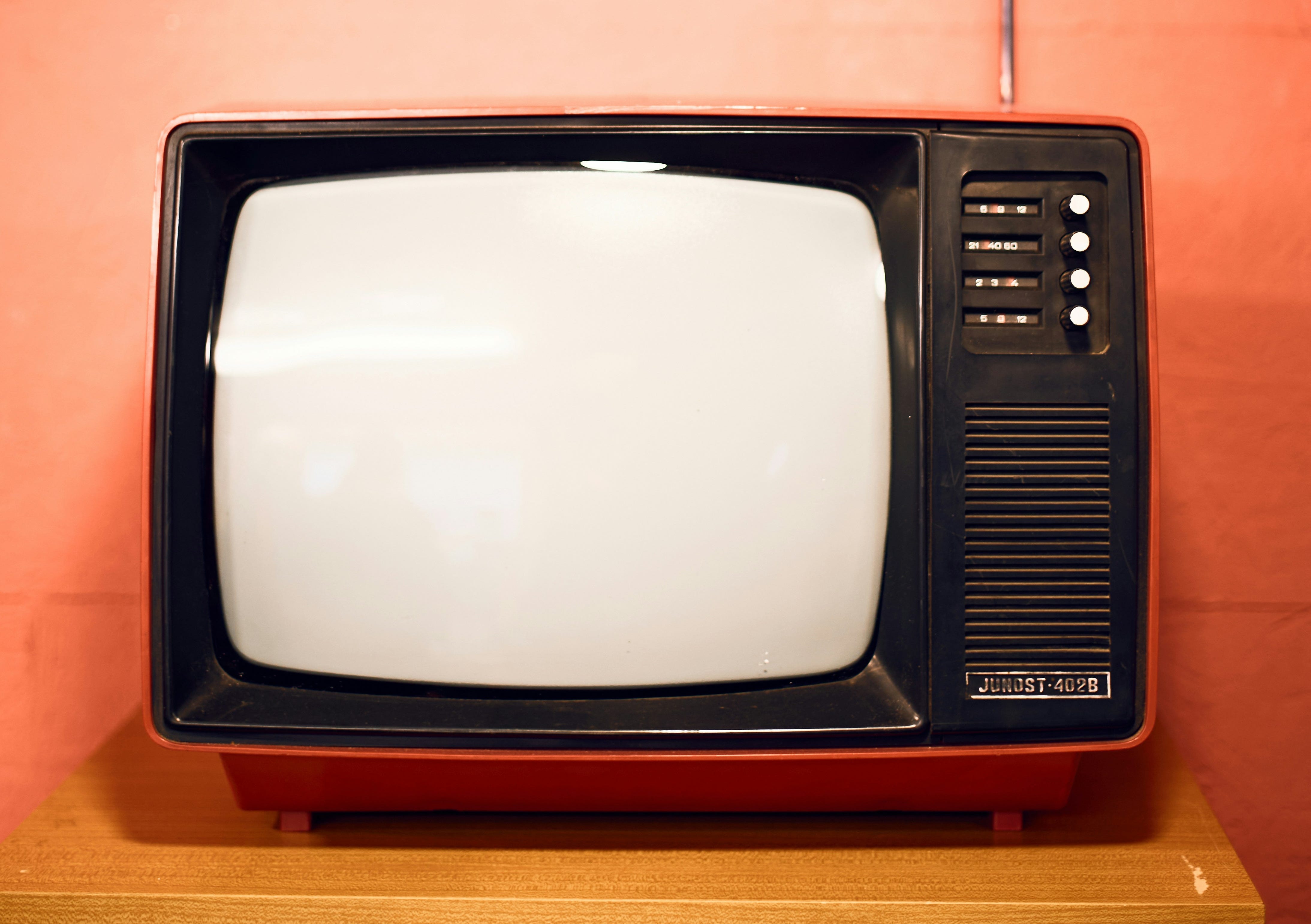
If you’ve been reading Flower Child for a while, you may have noticed references here and there to TV shows. You may have noticed entire posts I’ve written about TV shows. You may be thinking Rafael and I watch too much TV.
You may be right.
Look, I’d be the first to say Rafael and I watch too much TV. Okay, let me get that out of the way: I AM the first to say it. We watch too much TV. At least, I can speak for myself and say I watch too much TV.
I haven’t always been like this. But to be fair, TV hasn’t always been like this.
My life in TV
Like all Flower Children, I grew up during a time when TV was limited. It wasn’t even in color when I started watching The Three Stooges, which I’m told I loved as a toddler in Argentina; fortunately, I have no memory of that.
In the pre-cable days in Urbana, Illinois, we were limited to four channels, and they stopped broadcasting around midnight. We watched a few shows regularly: The Flintstones, Gilligan’s Island, Get Smart, Bewitched, Laugh-In, Star Trek; then Bob Newhart, Mary Tyler Moore, M*A*S*H, All in the Family, Carol Burnett; later The Jeffersons, Monty Python, Saturday Night Live. But to catch the shows, you had to be home when they aired.
During my college years, I watched almost no TV. To watch it in the dorm you had to go to a TV room, and you had to hope no one else was monopolizing the TV with a different show when you wanted to watch yours. TV wasn’t enough of a draw for me to bother.
I went through other periods like that — in particular during my mid- to late 30s in the 1990s, when I lived alone and was often too busy to fit in much TV. Even then, though, the Friends and Seinfeld characters, who appeared at 6 or 7 every weeknight, were my regular dinner companions. And did I binge West Wing, Six Feet Under, and Sex and the City? Yes, I did. Did the shows of that time herald the beginning of TV’s “golden age,” taking us far beyond the early sitcoms? With their excellent writing (SATC being a glaring exception), they certainly did their part to elevate the form.
When Rafael and I moved in together in 2006, I was introduced to the wide world of cable TV, something I’d never considered worth paying for. We watched The Daily Show every night, and some other good shows like Scrubs, Boston Legal, and 30 Rock. But we also caught glimpses of some truly bizarre reality shows, which were becoming a thing then. One of the weirdest was Amish in the City, featuring some young Amish people on “rumspringa” (their allotted time to experience the outside world) living in a house in LA with “city kids,” who taught them useful life skills like how to shop for trendy clothes and the right way to apply makeup. There was also the somewhat deeper What Not to Wear, in which the people being taught how to dress well were also encouraged to accept themselves as they were — and often underwent what looked like meaningful psychological transformations.
Despite the reality schlock, TV’s golden age was in evidence at the time, with shows like Breaking Bad, Mad Men, and The Office. Since then, Rafael and I have added so many shows to our list — including all kinds of crime dramas, from Nordic Noir to Frolicy French to British Bleak to the more pastoral British mystery show, in which the quaint English village is exposed as the hotbed of murder and intrigue we all know it is. And what’s the deal with all those hot young priests helping the police solve crimes?
If we’re watching a compelling show like Call the Midwife, or something gripping like Severance, I look forward to our evening viewing. We have some lulls, when it seems like we’ve run out of good shows, but those don’t last.
What we think of TV
I’ll always remember my college Shakespeare professor, Tony Bing, telling us that in Shakespeare’s time, his plays were for the masses — so their status was similar to that of modern TV. (Remember, I was hearing this in the early 1980s, before TV’s golden age.) As surprising as that news was to me back then, Shakespeare’s plays weren’t considered highbrow when he wrote them; they were part of that era’s pop culture.
Novels went through a similar trajectory. I’ve always loved Jane Austen’s impassioned defense of the novel in Northanger Abbey, where she praises it as “only some work in which the greatest powers of the mind are displayed, in which the most thorough knowledge of human nature, the happiest delineation of its varieties, the liveliest effusions of wit and humour, are conveyed to the world in the best-chosen language.” There was a reason Austen felt she had to stand up for the novel.
How times have changed. Shakespeare and novels are now generally considered more highbrow, though it does of course depend on the novel. TV, on the other hand …
When TV was new, in the 1940s and ‘50s, the general consensus was that it was brain-rotting and far inferior to real art. In 1957, broadcast journalist Edward R. Murrow called it the “opiate of the people.” That attitude hadn’t changed much when I was growing up in the ‘60s and ‘70s, and we referred to TV as the “boob tube.”
In my case, it didn’t help that Father, a self-designated arbiter of quality (of TV and everything else), had a way of walking into a room where you were watching any given TV show and saying, “This is stupid.” Yet he wasn’t immune to the lure of TV, even very silly TV; he loved the British show Are You Being Served? Need I say more?
Even now, TV hasn’t totally escaped its lowbrow designation, though its status has gone up thanks to that much-touted golden age — not to mention how favorably it compares to other forms of entertainment out there these days, like TikTok videos created by “influencers.”
Of course, like novels, TV shows come in many forms. We have dreck like Love Island (which I’ve never watched), the Real Housewives shows (which I’ve also never watched), and The Bachelor (okay, I’ve watched a couple of those). But we also have an abundance of quality shows now, like Ted Lasso, The Good Place, and Shtisel. Watching those isn’t so bad, right?
Still, I sometimes find myself feeling guilty about watching TV, let alone the copious amounts of it Rafael and I take in. Certain friends, who shall remain nameless here, like to mention how little TV they watch — and I can’t help but detect a superior air in their pronouncements.
How much is too much?
I also can’t help thinking those friends just don’t get it. They haven’t fully experienced modern TV, so much better than most of what we grew up with.
But the truth is, even without those friends, I’d be wondering about my TV viewing. Even without them, I’d be thinking I watch too much TV.
Can I take solace in the fact that there are MANY MORE shows I have NOT seen than those I have seen? Well, there are so many shows available now that I’m not sure that helps.
But here’s the reality: by the evening, I’m often tired and just don’t feel up to reading or writing or doing anything more constructive than sitting on the couch and watching TV. This is not something to be celebrated, but it’s reality — much more real than any “reality” TV.
So maybe I can accept reality and make peace with watching TV. As long as it doesn’t get out of hand. As long as it doesn’t take up TOO much time. Maybe the question isn’t, TV, or not TV? Maybe the question is, How much TV? There’s always a happy medium; I just need to find it.
Do you watch much TV — or any TV? Do you feel like the amount you watch is too much, or just right?

A great alternative to watching TV
250 years, and what have we got to show for it? Well, we do have a FABULOUS monthly feminist story slam, Wham! Bam! Thank You! Slam! produced by the FABULOUS Nan Tepper. The best thing about it? The amazing storytellers. The second-best thing about it? You can see it live for only a few bucks!
This month’s theme is “Freedom or Fear?” — and I’m telling a story there on Saturday, July 18, at 2pm PT, 5pm ET. It’s virtual; you can join from anywhere!
Will my story have anything to do with TV? Will it be completely unrelated to TV? Will you appear in it? (Okay, don’t get your hopes up — it may not be time for your 15 minutes of fame, and besides, the stories are only 4 minutes each.)
To find out, you’ll have to come to the slam. It’s a live show — much better than watching TV. Hope to see you there!
Once at a Narrative Magazine fund-raising event, I was seated at a table with Joyce Carol Oates(!), who opined that the best writing these days was for TV. This was a bit before Covid. She especially liked Millennium, which I've never seen...have you?
I highly recommend the streaming route (we view on a PC monitor, but there are ways to stream on a big TV if you have one). Yes, you pay for platforms individually, and it adds up, but I think our total is around $70/month for Passport, Apple+, Netflix, Paramount+, and Hulu. Oh, and YouTube, I pay to have no ads.
Recent suggestions: Widow's Bay (Apple+), The Agency, Elsbeth, new Matlock, Ghosts, Daily Show Mondays for Jon Stewart (Paramount+); The Man in the High Castle, Victoria, Doc (Netflix -- where also Hamnet just became available); The Good Doctor, Brilliant Minds (Hulu). We often discover an old series and have years' worth to watch.
And no commercials!! Even muted, the visuals are stressful. I recall the bank of giant monitors at the gym . . .