

My Favorite Drug
It might not be what you think.

If you enjoy this post, I’d LOVE it if you’d click the ❤️ at the top or bottom. Thank you!!
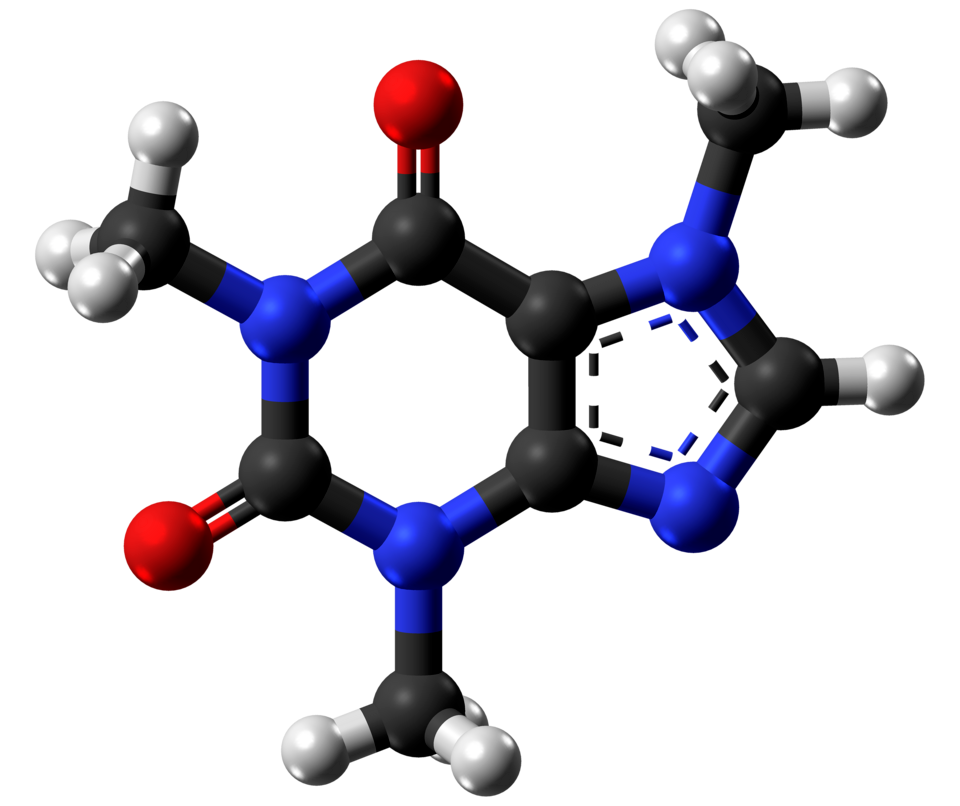
Despite my various ayahuasca journeys, my three MDMA therapy sessions, and the groovy, psychedelic wordmark at the top of Flower Child ⬆️, I’m not really into drugs. Psychedelics don’t seem to agree with me anymore, and you can’t exactly do them every day; I never went to ecstasy-fueled raves — or, okay, to any kind of raves; I don’t smoke pot anymore. I don’t even drink.
Except for one mind-altering drink, that is. Coffee.

TV may be the “opiate of the people,” but coffee is the drug that perks us up. Coffee keeps us happy. Coffee helps us think. Can I do the Wordle and Spelling Bee without coffee? Sure, but I might not make it to Queen Bee.
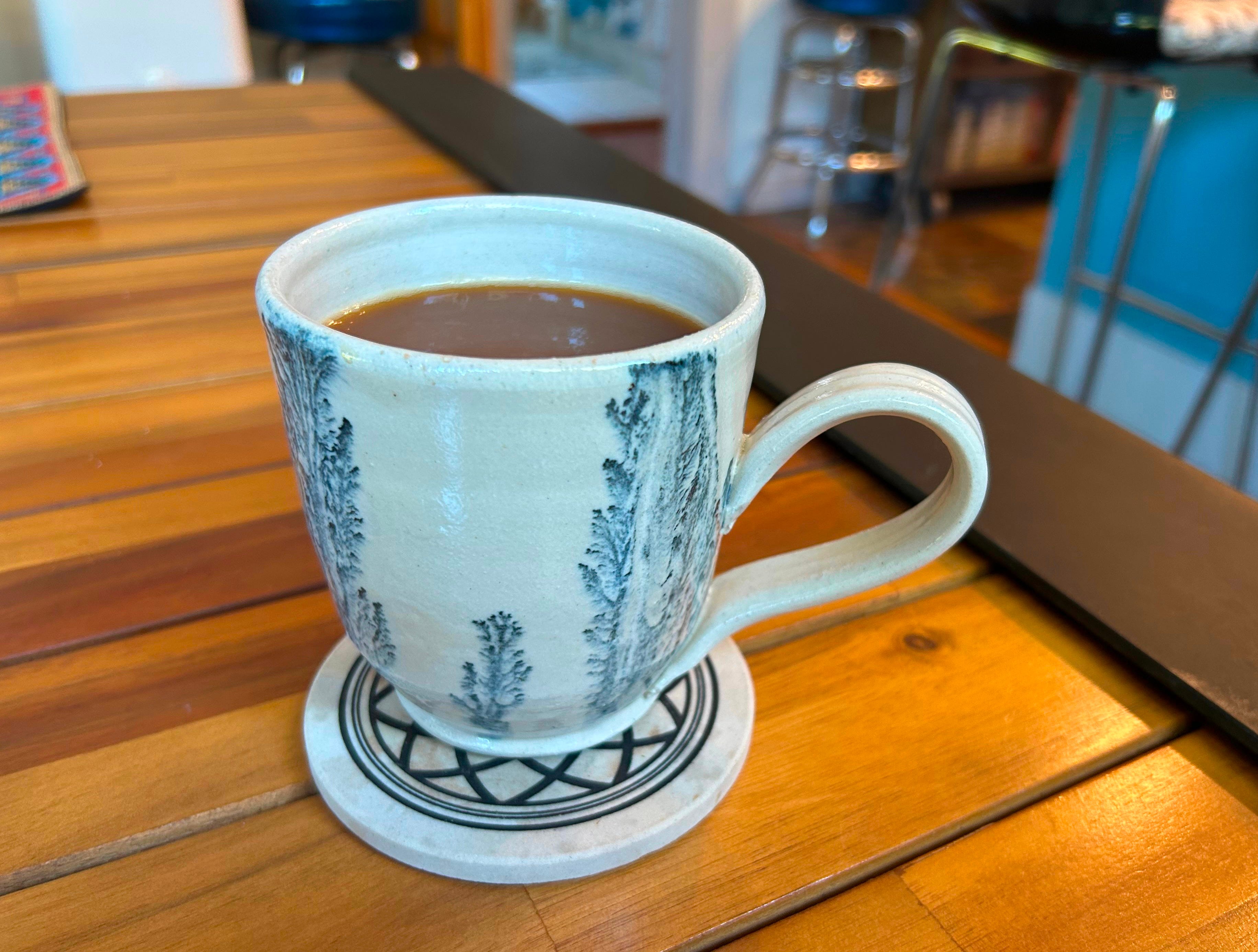
You may be wondering why I’m calling coffee a drug. I’ll tell you why: because it IS a drug.
Anderson Cooper and Michael Pollan agree with me, not that I need their validation. But, as Anderson points out in this short video, as a culture we’re in denial about caffeine’s nature as a drug — even giving it to children in sodas. It’s in fact a powerful — and addictive — drug, says Pollan, albeit a useful one.
I’m not alone
Something like 80% to 90% of people globally use caffeine, making it the world’s most popular psychoactive drug. Whatever the exact number, that’s a lot of people.
Not all of that caffeine is in the form of coffee — some is found in tea and sodas — but coffee is popular enough that globally, about 2.25 billion cups are consumed each day.
Coffee’s been popular for a while. Did you know Bach wrote a Coffee Cantata in the 1730s? It’s about a young woman’s love for coffee and her father’s efforts to stop her from drinking it. I know about it thanks to my own father, who used to play the recording now and then — but had no problem with me drinking coffee.
A few of Lieschen’s lines from the libretto:
Father, don't be so severe! If I can't drink my bowl of coffee three times daily, then in my torment I will shrivel up like a piece of roast goat.
Mmm! How sweet the coffee tastes, more delicious than a thousand kisses, mellower than muscatel wine.
Coffee, coffee I must have, and if someone wishes to give me a treat, ah, then pour me out some coffee!
I’m a coffee wimp and can only have one cup in the morning and a decaf in the early afternoon. When I see all those TV detectives (and the lawyers, art historians, hot priests, and others who so diligently help the detectives solve crimes) drinking coffee all day and night, I get wistful; I can’t drink that much coffee, not even the three cups a day enjoyed by Lieschen.
But I can still relate to her. I went through a brief period, years ago, when I cut out coffee for a while. When I started drinking it again, I felt a surge of anticipation every night when I went to bed, thinking about the coffee I’d get to have in the morning. Even now, I’ve been known to look forward to my morning coffee. As I write this, I’m still savoring the taste of the afternoon decaf I drank earlier, its smooth earthiness lingering pleasantly in my mouth.
Coffee and capitalism
Coffee hasn’t been with us for the thousands of years that we humans have been doing drugs like ayahuasca or psilocybin. But since it hit the big time around 1650, it’s been an integral part of Western culture, and it’s now spread far beyond the West.
Coffee first became popular in the Ottoman Empire in the 1500s, as an alternative to the alcohol prohibited in Muslim regions. Before long it caught on in Europe and the New World, along with tea, replacing alcohol (which was safer than the often-contaminated water) as the preferred (and even safer) drink of workers in a world where work was shifting from farms to factories and offices.
Caffeine’s effect, in both coffee and tea, was so powerful that it likely contributed to the Enlightenment, the Age of Reason, and the Industrial Revolution:
Those sound like good things, but caffeine has a darker side. In concert with the advent of artificial lighting, it facilitated the rise of capitalism by freeing us from our circadian rhythms, increasing our energy, and sharpening our thinking. And if you’ve been reading Flower Child, you know how I feel about capitalism.
As if that weren’t bad enough, caffeine’s history is tainted by slavery and the exploitation of indigenous people.
I’m not much of a tea drinker, but it turns out that the rise of tea, with its bitter flavor, led to a rise in demand for sugar. That led to sugar plantations in Brazil and the Caribbean worked by slaves, in conditions so bad they often died within seven years of arriving there.
Sugar in coffee is an abomination (I stand by that!), but coffee is similarly tainted. The delight I feel at the very thought of coffee is tempered by its dark history as it spread around the globe. In Brazil, labor-intensive coffee harvesting was done by slaves. In El Salvador, land privatization and the creation of a coffee monoculture forced rural Salvadorans to work on coffee plantations to survive — rather than farming small plots of extremely fertile land, as they’d done before.
Even now, coffee production remains problematic. Coffee farmers typically earn only 7–10% of coffee’s retail price, with a few large global roasters enjoying most of the profits. Hmm, sounds like capitalism at work again.
Speaking of capitalism, to this day, caffeine continues fueling our late-stage capitalist system. Where will it end? Will it end at all?
Coffee at risk
Was all this a sneaky way of working in how climate change is affecting coffee? Maybe. Maybe.
Over a decade ago in 2014, I was seeing dire warnings about upcoming coffee shortages driven by climate change. Now, these warnings are becoming more real. Extreme weather has already increased the price of coffee. Some scientists are predicting that by 2050, we’ll see the end of “coffee as we know it,” because by then, at least half the land it grows on will be unable to support coffee.
There are some potential solutions — or at least, mitigations — to the impending coffee crisis, like ethical sourcing and agroforestry. But there’s no getting around the fact that because of the specific growing conditions it needs, coffee is more vulnerable to climate change than other crops.
If anything can get people interested in fighting climate change, this should. Okay, it won’t make a difference to people who refuse to hear the truth. But I know that’s not you, dear Flower Child reader.
Still, what can any of us do? There’s a whole system that needs changing, and that’s a big lift. We can still do SOMETHING, of course. When it comes to coffee, we can buy Fairtrade coffee, and we can put pressure on coffee suppliers to mitigate climate change and help farmers adapt. When it comes to other areas, while working to change the system we can take a number of climate actions in our own lives — not the least among those, voting for Democrats.
I’m not going to sugar-coat things, though — that would be even worse than putting sugar in coffee. I’m worried about our sweet old world, and I’m worried about my sweet, sweet coffee (with no sugar!).
Pollan says, “coffee has helped create exactly the kind of world that coffee needs to thrive: a world driven by consumer capitalism, ringed by global trade, and dominated by a species that can now barely get out of bed without its help.”
It’s ironic that the very system coffee facilitated is now putting coffee at risk, which may in turn put that system at risk — if coffee is as critical to the capitalist system as Pollan thinks it is. That seems like incentive for the capitalists to do something, doesn’t it? But capitalists don’t look much beyond the next quarter. Within that mindset, 2050 is eons away.
Will the threat to coffee wake up the capitalists to the threats of capitalism-fueled climate change? I have my doubts. In the meantime, all any of us can do is take whatever actions we can to work for a better world, while enjoying and appreciating what we have now. If that means enjoying our coffee while we have it, I’m down with that.

While it’s younger than coffee at the age of 250, our dear nation is not as far along as it should be. To ease the pain of that reality, you can join me at this month’s Wham! Bam! Thank You! Slam! and hear some wonderful women, plus me, tell our 4-minute stories: this Saturday, July 18, at 2pm PT, 5pm ET. It’s virtual, so you can join from anywhere!
Grab your coffee, or your other beverage or drug of choice (I’m not judging!), and join me for this fabulous feast of fiction, fable, and fancy — well, actually, true and compelling stories. You’ll laugh, you’ll cry, you’ll feel all the things.
Hope to see you there!
I’m glad to read the follow up to the sneak preview of coffee that we discussed at our gathering recently! As someone who doesn’t drink coffee or caffeinated tea at all, I can relate only in the sense that I look forward to my dark chocolate each day, probably the way some people look forward to their coffee. It has a rich earthiness and complexity to it, and does give me a lift of energy and mood. While it does contain some caffeine, it’s probably the sugar that I’m most addicted to.
I don't drink coffee, but I have one thing to add as a distance runner: caffeine is the most scientifically studied and proven performance-enhancing drug in human history!