

What's Normal?
Is it the same as what's natural? What does that even mean?

Today’s post is sort of a follow-up to last week’s, though it can stand on its own. If you enjoy it, I’d LOVE it if you’d click the ❤️ at the top or bottom. Thank you!!
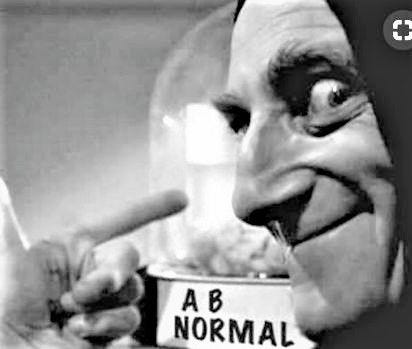
Dr. Frederick Frankenstein: Now, that brain that you gave me. Was it Hans Delbrück’s?
Igor: [pauses] No.
Dr. Frederick Frankenstein: Ah! Good. Would you mind telling me whose brain I DID put in?
Igor: And you won’t be angry?
Dr. Frederick Frankenstein: I will NOT be angry.
Igor: Abby someone.
Dr. Frederick Frankenstein: Abby someone. Abby who?
Igor: Abby ... Normal.
Dr. Frederick Frankenstein: [pauses] Abby Normal?
Igor: I’m almost sure that was the name.— Young Frankenstein
My experiences traveling as a kid — especially in Mexico, but even in Europe and Argentina — taught me there’s more than one way to live.
Like most life lessons, it’s one I’ve had to continue learning. And as I’ve gotten older, I’ve uncovered another layer to it — one that I always sensed was there but that’s recently come into a sort of fuzzy semi-focus.
All wrong
Here’s the thing: I often look around at our world and think it’s all wrong. What do I mean? I mean cars. I mean airplanes. I mean highways and malls and traffic jams. I mean ugly high-rises. TVs. Plastics. The houses and apartments we live in, devoid of nature as they are. The concrete jungles many of those houses and apartments are in.
And then there are all those social norms and expectations, which are taken as gospel by so many of us.
Don’t get me wrong — I truly, deeply love a lot about our human cultures, like art of various kinds. I passionately love cities like New York and Chicago and Mexico City and Paris. I love the comforts of home. I would not be happy roughing it; I didn’t like camping till I discovered air mattresses, and I rely on running water and electricity. I also rely on my apps, like the one that lets me heat our hot tub and the one that lets me dole out dry food to our cats. I love the cloud, where I’m writing this post.
I love or at least rely on all these things, and they’re part of the environment I’m used to. I’ve adapted to them.
I also think they’re all wrong. This is not the way we’re meant to live; it’s unnatural. It’s not normal, though we treat it as normal.
Rafael disagrees with me about the natural part. Even plastics, computers, and concrete, he feels, are natural; we humans, part of nature, made them, and we made them using materials found in nature.
I see his point — to a point. And maybe part of my problem with it all is my penchant for scruffiness. From as long as I can remember — I’m talking from the age of three or four — I’ve been bothered by orderly suburbs and manicured lawns; that seems to be in my DNA.
But that’s just part of my problem; a scruffy house and yard are still a house and yard. There’s still something unnatural about them. There’s something unnatural about a lot of our clothing: Nylon. Polyester. High heels. The same goes for our built environments. Our ways of growing food. Our social structures. And yet, all of these have become our norms, so in that sense we can say they’re normal — but should they be?
What’s normal, anyway? Here’s a condensed dictionary definition:
Normal (adjective)
1: usual or ordinary : not strange
2: mentally and physically healthy
Normal (noun): the usual or expected state, level, amount, etc.
I realize I’m conflating “natural” and “normal” here, but to me they fit into the same discussion. So many aspects of our lives that we’ve come to see as normal aren’t natural at all — yet they’ve become the norm by virtue of becoming, over time, “usual,” “ordinary,” and “the expected state.” But why? Should all these things be considered normal just because we’ve adapted to them, even if they’re not natural? I hope you’ll bear with me as I continue trying to think this through.
So much has always felt off to me (unnatural? Abby Normal?), but it’s only recently that I’ve approached a new layer of thinking about this, influenced by books like Sex at Dawn, The Dawn of Everything (okay, I only read about half of that one), and Sapiens. With their sweeping looks at human history and prehistory, these books (plus Don’t Sleep, There Are Snakes, about the Amazonian Pirahã tribe), made me aware that there are even more ways to live than the many variations we see in our modern world from one country to the next. That the fundamentals that are fairly consistent among modern countries — large-scale agriculture, factories, houses, streets, hierarchies, a societal preference for monogamy — are not so fundamental after all.
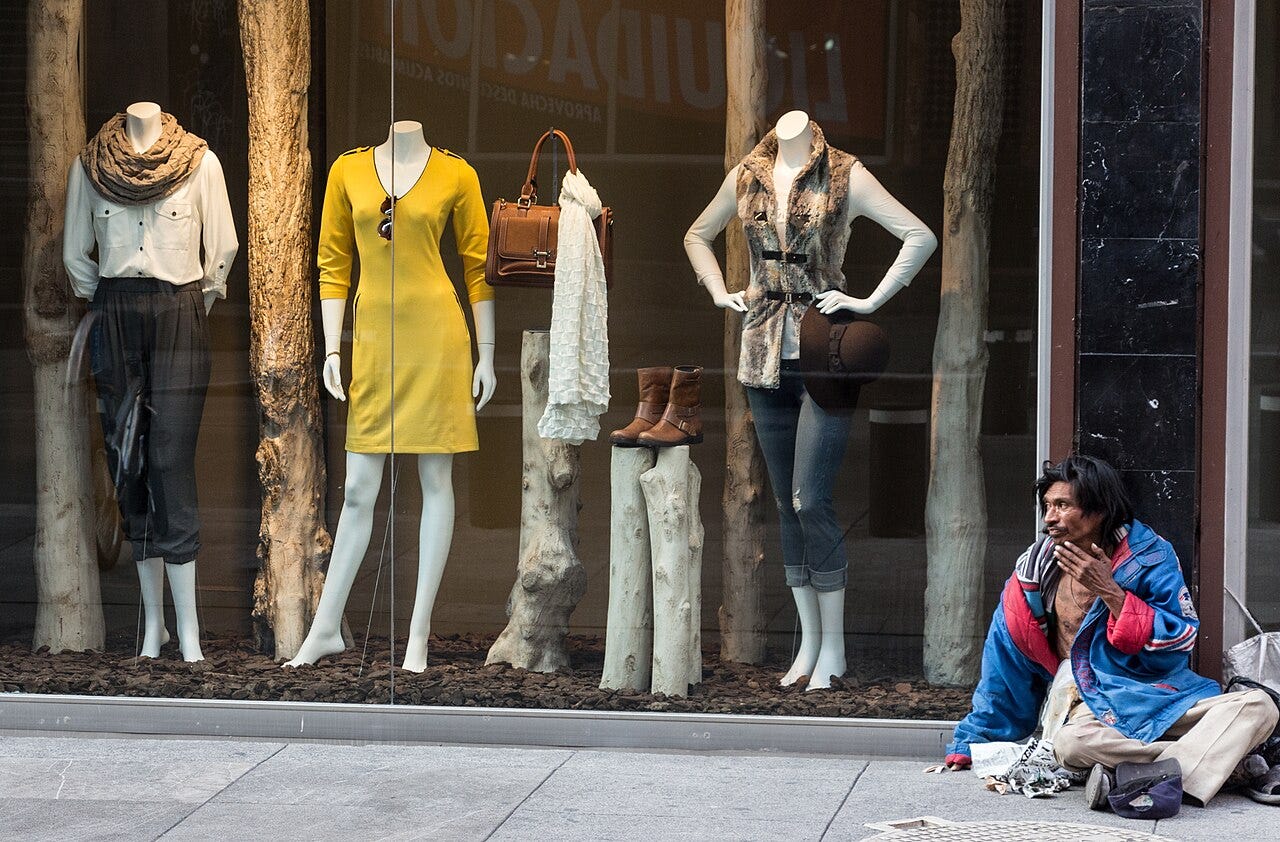
A few of my least favorite things
It would take much more space than I have here to delve into each aspect of our modern world that we take for granted — and why they may not be so natural, normal, or fundamental. But let’s take a brief look at a few.
I’ll start with one that particularly interests me: monogamy. There’s a certain case to be made for monogamy being a natural response to the lengthy human childhood, which benefits from having two stable parents around for a long period. But wait, is that necessary? There are many ways to raise a child, including the proverbial village. In some hunter-gatherer societies I’ve read about, monogamy was not the norm, even if people tended to have a few preferred partners. Plus, human testicle size suggests a natural tendency NOT to be monogamous, though that tendency isn’t as pronounced as in some primates; we’re more monogamous than chimps and bonobos, but less monogamous than gorillas and orangutans.
Does believing monogamy is unnatural for humans make me want to go out and be non-monogamous? No. I have no interest in polyamory, which apart from other drawbacks seems like it would take way too much time and energy. But context is everything: I’m living in today’s world. I could see it working in a hunter-gatherer society, where so much would be different.
That brings me to a few other items: Nuclear families. Single-family homes with fences around our yards. Neighborhoods in which neighbors barely know one another. None of these are natural, none of them should be considered normal, and all of them have made us more isolated and less happy.
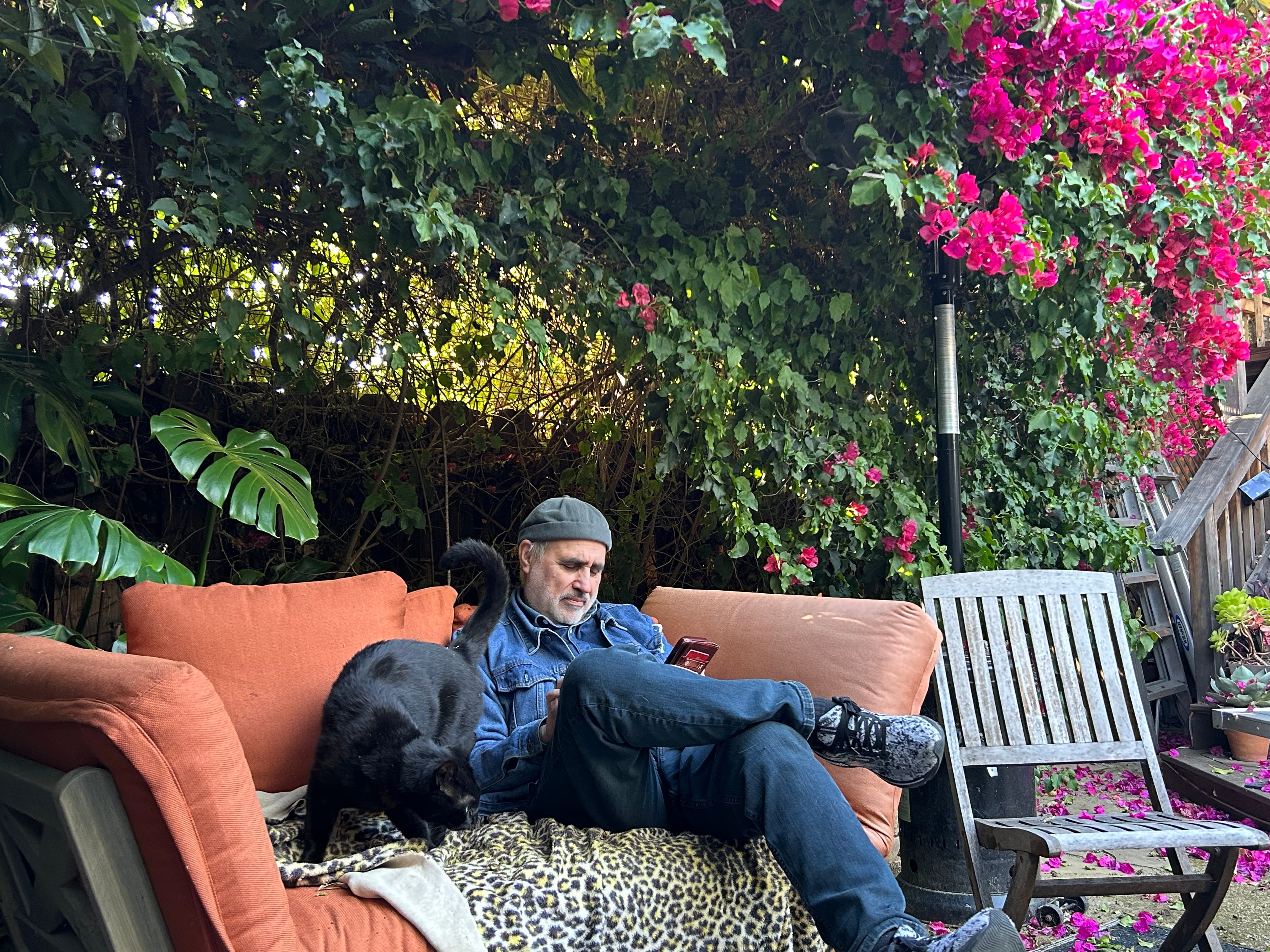
Does that make me want to go and live in a commune? No; I’m an introvert who likes my space and quiet, including our secluded little backyard oasis, the “R&R Spa.” But I do dream of some kind of co-housing that would provide more community. More people than you might think share this dream, but it can be hard to make it a reality because of housing costs — and because to achieve it, you’re going against all the structures and norms of our society.
When it comes to things like cars and plastics and large-scale agriculture — and while I’m at it, I’ll throw in extractive, late-stage capitalism — we’re in even more of a bind. Agriculture as we know it today is what made possible our exploding global population, which has more than doubled in the time I’ve been alive and, assuming I live to be 90, is likely to more than triple over my lifespan. We can’t simply throw out this type of agriculture in one fell swoop. And just try cutting plastics out of your life; you can make some progress, but eliminating them altogether would be tough. Want an even tougher assignment? Try escaping late-stage capitalism.
Let’s face it: we can’t go back to being hunter-gatherers and adopt the norms of those societies. For one thing, there are too many of us. For another, we’re too accustomed to our modern comforts and conveniences. And maybe more significant that those hurdles is that we’ve changed what we consider normal.
Adaptation is a double-edged sword
Humans are adaptable. We become immersed in whatever environment we’re in and grow accustomed to it, and then we start to think it’s normal.
Here’s a very small example: My high school boyfriend in Urbana, Illinois lived in a subdivision — Urbana was too small for suburbs — where the houses were newer and the trees were smaller. His bedroom in his family’s split-level house had a small, high window you couldn’t easily see out of, there was wall-to-wall carpeting, and the whole house just didn’t feel inviting to me compared to my older house in my older neighborhood. After a while, though, it started to feel normal, because it had become familiar. I even developed a certain fondness for that room and that house, based on my time spent there and the people in it.
The same thing happens to us on a larger scale; we adapt to our society and our surroundings. In many respects, our human tendency to adapt serves us well. Even if some of us never adapt as fully as others.
But we don’t usually realize we’re adapting as we become attached to the trappings of being human as we know it; we become attached to certain eras, styles, ways of behaving.
I didn’t love the 1970s when I was living through them, but now I have strong feelings of nostalgia for that decade. Even when I remember the bright blue eye shadow, or Virginia Slims ads, or disco music. (Though we also had Star Wars and progress on women’s rights and free-range kids.) It’s common to have this reaction to a time and place in our culture — to absorb a zeitgeist till it feels normal and to remember it fondly later. It’s common to think whatever we’re exposed to is the normal way of being human.
Who knows what’s normal or natural
I’ve had the privilege to eschew some of the less pleasant features of modern life: alarm clocks (I haven’t used one regularly since 1997), long commutes, 50-hour work weeks. But I’m stuck with most of what makes up our world today. And I can’t help often looking around and thinking, This is all wrong. It certainly isn’t natural.
I know, having this thought won’t change anything. So, what do I do with all this? What do any of us do with it?
I could get rid of my car, but that would constrain my life in ways I’m not okay with. Same goes for my phone and laptop. I could move to an off-grid house in the country, but that isn’t my jam and could also make it even harder to find the community I crave. And even then, I couldn’t escape everything I find unnatural or Abby Normal. I couldn’t escape late-stage capitalism.
What I CAN do, what we can all do: We can try not to take things for granted just because we’re used to them. We can question what we’ve grown accustomed to. We can acknowledge that there may be more ways to live than we ever dreamed of — and that some of those ways might be far better than our current ones.
While most of what I object to, what I feel we shouldn’t consider normal, isn’t likely to change — at least not anytime soon — we may be forced to make some big changes if we’re to survive the mess we’ve created on this planet. We may be forced to find a system that works better than our current extractive, late-stage capitalism.
To have any hope of making such a big change, we have to question our understanding of what’s normal. So I leave you with that: start to question. Don’t accept things as normal just because you’re used to them. Encourage others to question. It’s a start.
Don’t forget, I’m an expert in how to be weird!
Great post, Rosana! You're totally right; this is a bizarre world run for many hundreds of years by rich older white guys for their own benefit. Time to envision something different!
I too jettisoned my alarm clock during the pandemic and only use one now if I have to go to the airport or something like that. I never want to go back!